
Anterior Cervical Corpectomy

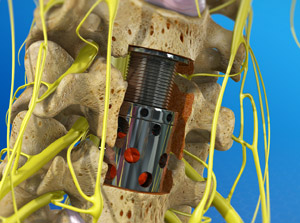
An anterior cervical corpectomy takes pressure off the spinal cord and spinal nerves in the neck. Bone and discs are removed from the cervical spine, and the area is then fused.
Reaching the Spine
You lie on your back and are given anesthesia. The surgeon makes an incision in the front of the neck and gently moves the neck's structures to the side to open a path to the spine.
Relieving the Pressure
The discs above and below the problem vertebra are taken out, along with the large front part of that bone, called the vertebral body. Some patients need more than one vertebral body and disc removed. Any bone spurs or other tissue pressing on the spinal cord or nerves are also addressed.
Placing a Bone Graft
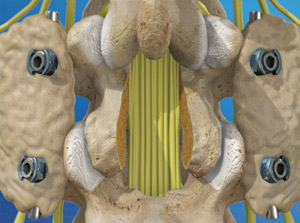
Once the nerves are free, the spine needs to be stabilized. A bone graft is commonly set into the open space, and a metal plate with screws may be used to hold it.
Using a Cage Instead
Your surgeon may choose a cage rather than a graft. This implant keeps the vertebrae in the correct position, and many cages have a hollow center that is filled with bone graft.
After Surgery
The incision is closed, and you may wear a neck brace. Over the following weeks new bone grows and bonds firmly to the graft or implant, creating a permanent fusion. Physical therapy may help your recovery.
Questions about Anterior Cervical Corpectomy? Call Dr. Auerbach’s office at (718) 518-5814 or send a message.
This information is for general education and does not replace advice from your doctor.
Printed from https://drauerbach.com/patient-education/anterior-cervical-corpectomy.html
 2:04
2:04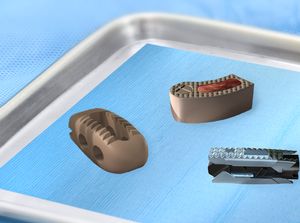 1:40
1:40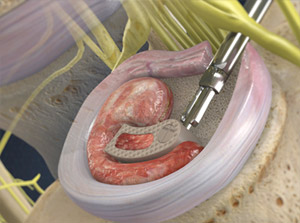 1:41
1:41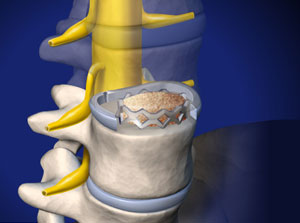 1:34
1:34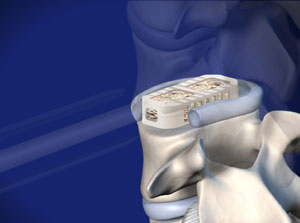 2:10
2:10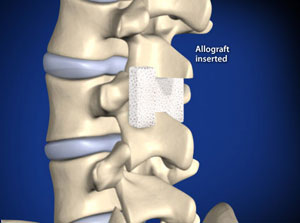 2:08
2:08