TLIF: Transforaminal Lumbar Interbody Fusion

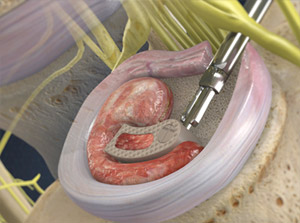
Transforaminal lumbar interbody fusion (TLIF) is most often recommended for back or leg pain caused by degenerative disc disease. The goal is to stabilize the spine by joining vertebrae together with bone graft.
The Incision
The surgery is done through one or more small incisions in the back.
Reaching the Disc
Some vertebral bone is removed to reach the disc. Because most TLIF procedures approach the disc from just one side of the spine, recovery is usually shorter than after traditional fusion surgery.
Removing the Disc
Most of the damaged disc is taken out. Part of its outer wall is intentionally left behind to help hold the bone graft.
Placing the Implant
An implant is set into the empty disc space to bring the vertebrae back into line and take pressure off pinched nerve roots. Small pieces of bone (morselized bone) may also be packed around it.
Extra Support
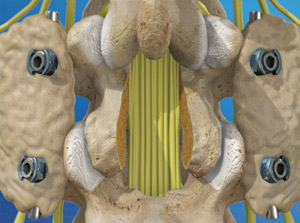
Screws and rods may be added for more stability, and bone graft is laid along the sides of the spine as well.
After Surgery
Over time the bone graft grows into and around the implants, building a bridge of bone between the vertebrae above and below. That solid bridge is the fusion.
Questions about TLIF: Transforaminal Lumbar Interbody Fusion? Call Dr. Auerbach’s office at (718) 518-5814 or send a message.
This information is for general education and does not replace advice from your doctor.
Printed from https://drauerbach.com/patient-education/tlif-transforaminal-lumbar-interbody-fusion.html
 2:04
2:04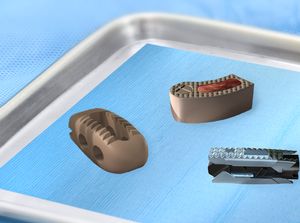 1:40
1:40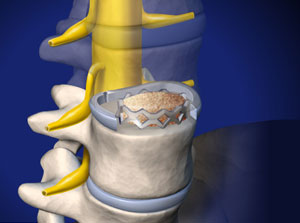 1:34
1:34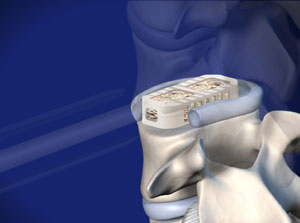 2:10
2:10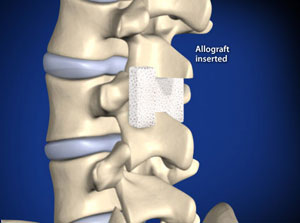 2:08
2:08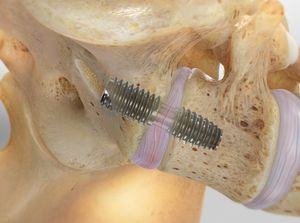 1:43
1:43