
XLIF® Lateral Lumbar Interbody Fusion

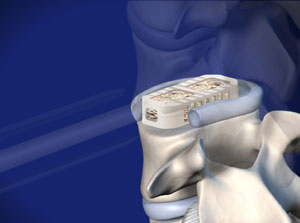
XLIF® differs from traditional back surgery because it reaches the spine through the patient's side, so the major back muscles are left alone. This minimally invasive procedure is usually used for leg or back pain from degenerative disc disease and can often be done as an outpatient.
Reaching the Spine
The surgeon makes two small incisions in the side, far smaller than those used in traditional back surgery. A probe is placed through one, and the other helps guide the surgical instruments.
Protecting the Nerves
The probe stimulates and detects nerves along the side of the spine, so any nerve it finds can be steered around and left unharmed. Live x-ray images help guide the probe to the right spot on the spine.
Opening a Path
A series of dilation tubes is slid over the probe to widen the opening, and a retractor then holds muscle tissue aside to expose the spine.
Removing the Disc
Working through the channel the retractor creates, the surgeon removes the damaged disc.
Placing the Implant
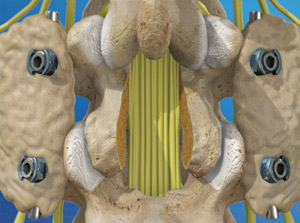
An implant filled with bone graft is set into the empty disc space, bringing the vertebrae back into line and taking pressure off pinched nerve roots. Bone morphogenetic protein (BMP) may also be used to encourage bone growth and a strong fusion.
After Surgery
Over time the bone graft grows into and around the implant, building a bridge of bone between the vertebrae above and below. That solid bridge is the fusion.
Questions about XLIF® Lateral Lumbar Interbody Fusion? Call Dr. Auerbach’s office at (718) 518-5814 or send a message.
This information is for general education and does not replace advice from your doctor.
Printed from https://drauerbach.com/patient-education/xlif-lateral-lumbar-interbody-fusion.html
 2:04
2:04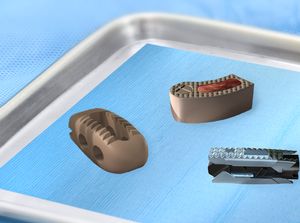 1:40
1:40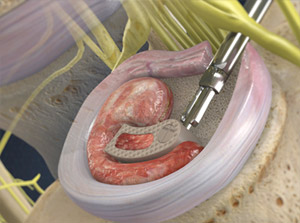 1:41
1:41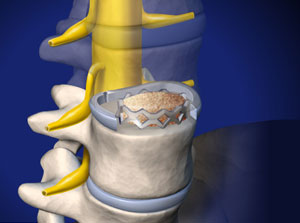 1:34
1:34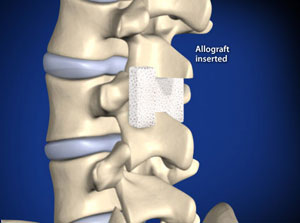 2:08
2:08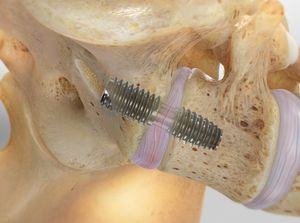 1:43
1:43